Western EU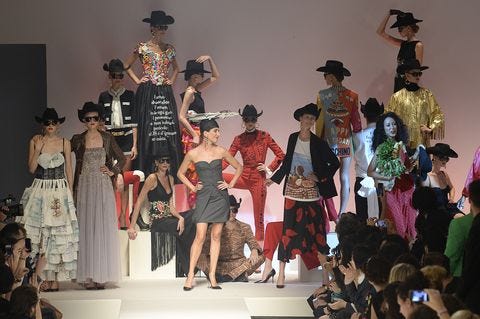
What Is Moschino?
Moschino is an Italian fashion house known for its irreverence. It produces ready-to-wear, accessories, and fragrance, but what sets it apart is its attitude. This is a brand that treats fashion as both product and commentary.
The Moschino brand has always existed slightly outside the traditional idea of luxury. It delivers craftsmanship, yes, but never without a twist. Logos are exaggerated, symbols are playful and collections often reference pop culture, advertising, and even the fashion system itself. It’s this balance, between polish and provocation, that defines what is Moschino brand identity today.
The History of Moschino
1983 — The Beginning
Franco Moschino launches his label in Milan after working as an illustrator for Gianni Versace and designing at Cadette. From the start, he challenges the idea of “good taste,” mixing classic tailoring with irony, slogans, and unexpected materials.
Late 1980s — Building a Signature
Slogans, parody, and exaggerated luxury codes become central to the brand. Moschino becomes known for mocking fashion from within — reworking classic pieces and embedding commentary directly into garments. Motifs like hearts, peace signs, and bold accessories begin to define the house.
1988 — Cheap and Chic Moschino
The launch of Cheap and Chic Moschino expands the brand into a diffusion line for women, offering a lower price point while maintaining its irreverent identity. It becomes one of the brand’s most recognisable lines.
1994 — A Sudden Shift
Franco Moschino dies at 44. Rossella Jardini, his long-time collaborator, becomes creative director and continues the brand’s visual language, maintaining its codes while evolving it for a broader audience.
1999 — Aeffe Group Acquisition
Moschino becomes part of the Aeffe Group, marking a key moment in its commercial expansion and international distribution.
2000s — Expansion Across Categories
The brand expands further into accessories, eyewear, fragrance, and licensing partnerships, strengthening its global presence and positioning beyond ready-to-wear.
2008 — Love Moschino
The brand introduces Love Moschino, replacing the Moschino Jeans line. Positioned as a more accessible line, it focuses on casual pieces, accessories, and logo-driven designs, expanding the brand’s reach to a broader audience.
2013 — Jeremy Scott Takes Over
Jeremy Scott is appointed creative director. His debut collections reintroduce Moschino’s original irreverence through overt pop culture references, including fast food branding, Barbie, and cartoon imagery, bringing the brand renewed global attention.
2023 — End of the Jeremy Scott Era
Jeremy Scott steps down after a decade at the house, having re-established Moschino as one of the most recognisable and talked-about brands in contemporary fashion.
2024 — New Creative Direction
Adrian Appiolaza is appointed creative director, marking a new chapter for the house following the passing of Davide Renne shortly after his appointment in late 2023.
2020s — Continuing the Legacy
Moschino remains part of the Aeffe Group, continuing to produce ready-to-wear, accessories, and licensed products globally, with its identity still rooted in the codes established by Franco Moschino.
Why You Should Stock Wholesale Moschino
For retailers and eCommerce brands, Wholesale Moschino offers a balance of brand recognition, distinct design, and consistent demand. It’s a label customers already understand, which reduces friction at the point of sale and supports reliable sell-through across categories.
Here’s why it’s one of our best sellers:
- High Brand Recognition That Drives Faster Sales: Wholesale Moschino is a brand customers already know and actively look for. This reduces the need for heavy marketing or in-store explanation, helping products convert more quickly both online and on the shop floor.
- Distinct Design That Stands Out Instantly: Moschino pieces are visually recognisable, bold logos, strong graphics, and signature design codes. This makes Moschino wholesale easy to merchandise and ensures it doesn’t get lost among other brands.
- Strong Performance in Accessories: Categories like bags and small leather goods are consistent sellers. They’re easy entry points for customers and work well for gifting, increasing turnover across a wider audience.
- Appeal Across Multiple Price Points: Lines like Cheap and Chic Moschino and Love Moschino allow you to offer the brand at different price levels, helping you reach both entry-level and higher-spend customers without diluting brand identity.
- Consistent Demand Beyond Trends: Moschino’s recognisable aesthetic supports ongoing demand rather than short-term spikes, helping reduce risk when investing in wholesale stock.
- Access to Off-Price Moschino Wholesale Through Bundlex: Through Bundlex, you can access Moschino wholesale via our B2B wholesale marketplace with competitive pricing, curated off-price stock, and flexible buying, allowing you to secure recognised brands without overcommitting on inventory.
Final Thoughts
The History of Moschino is less about chronology and more about attitude. Franco Moschino didn’t just build a brand; he challenged an entire system, using fashion as both product and critique. That perspective still runs through the house today, whether in its collections, accessories, or cultural presence.
In a market full of sameness, Moschino remains distinct. And that distinction, bold, ironic, and instantly recognisable, is exactly what keeps people coming back. Explore our wholesale Moschino collection today!
FAQs
Is Moschino a good brand?
Yes, Moschino is known as a high-quality brand. It offers strong design identity, solid craftsmanship, and pieces that stand out rather than blend in.
Is Moschino a luxury brand?
Yes, but with a different approach. It operates within luxury fashion while actively challenging its conventions through humour and design.
What is Love Moschino?
Love Moschino is a more accessible line from the brand, focused on casual, logo-led pieces with a lighter, more commercial feel.